Ink, Drum, Repeat: The Paper Underground Refusing to Scroll
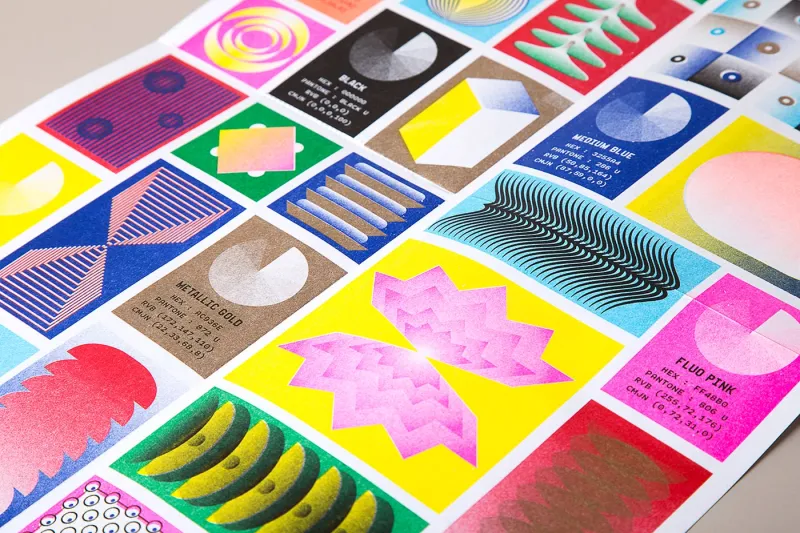
Photo: risograph printing studio colourful zine covers UK, via i.pinimg.com
On a wet Tuesday in Leeds, the loudest thing in the building is a risograph. It is not playing a playlist. It is printing a zine about bus routes, bad landlords and the price of a pint. The drum thumps, the paper feeds through, and a stack of slightly misregistered covers lands in a plastic tray. Nobody checks a dashboard. Nobody asks the algorithm what to do next. This is the paper underground, and in 2026 it is having a moment.
The anti-algorithm machine
We are told that creative work should be smooth. Clean type, perfect grids, a content calendar, a caption written before the image exists. The risograph refuses all of that. It smudges. It layers badly. It prints a colour that was never quite the colour you asked for. That friction is the point. A riso zine is not a file that can be duplicated forever without consequence. It is an object made in batches, by hand, with a finite run and a slightly different mood on every copy.
That is why the format has become a quiet antidote to polished digital content. Not because print is morally superior, but because it slows the exchange down. You have to go somewhere to get it. You have to talk to someone. You have to carry it home. In a culture that rewards instant reach, paper asks for a different kind of attention.
From photocopy club to community infrastructure
The UK scene is not just a handful of studios with nice Instagram grids. It is a loose network of print rooms, zine libraries, photocopy clubs, fairs and distros. You can find it in a Bristol church hall, a Glasgow community centre, a Manchester pub back room, a Cardiff arts space. The tables are often pay-what-you-can. The organisers are usually tired. The queues are usually worth it.
What makes this moment different is that the infrastructure is getting sturdier. Photocopy clubs are opening up their machines to people who cannot afford a riso of their own. Zine libraries are cataloguing local output rather than treating it as ephemera. Small presses are sharing distribution routes and splitting postage. Print fairs are becoming meet-ups for people who otherwise only know each other as usernames.
That matters because creative communities are not built by content alone. They are built by repeated, low-stakes contact. The person who swaps a zine with you at a fair in March might be the person who helps you print a poster for a housing campaign in October. Paper is a good excuse for that contact.
The politics of a stapled edge
Not every zine is a protest, and not every protest needs a slogan. But the politics of DIY print are often in the format itself. It is cheap enough to respond quickly. It is accessible enough that you do not need a design degree or a subscription to Adobe. It can be queer, angry, silly, local, oblique, unfinished. A riso poster can appear on a wall the same week a council vote happens. A photocopied pamphlet can be handed out at a demo without a print budget.
The UK’s independent print scene is also doing what a lot of digital platforms struggle to do: holding local memory. Zines about estate life, nightlife, migration, disability, club culture and grief are not just personal outpourings. They are records. They are arguments. They are proof that someone was here and thought this was worth making.
Fairs, swaps and the 2026 calendar
If you want in, the entry point is lower than you think. Go to a fair with cash and curiosity. Bring something to swap, even if it is a badly folded eight-page thing about your commute. Ask the person behind the table how they made it. Do not ask for a discount. Buy the weird one. Sign up for a photocopy club newsletter. Offer to help pack down tables at the end.
In 2026, look out for the seasonal rhythm of UK print culture: spring book arts fairs, summer zine fests, autumn art book events and the smaller, word-of-mouth swaps that never make it onto a big listing. Bristol, Glasgow, London, Leeds, Manchester and Brighton all have their own versions. The best ones still feel like someone’s living room with better lighting and more staplers.
Paper as a slow network
The risograph rebellion is not really about rejecting screens. It is about refusing to let screens set the terms for everything. A zine can exist online and offline. A print studio can have a website. The point is that the object does not need the feed to be real. It needs a table, a person, a bag, a shelf.
That is why paper feels quietly radical in 2026. It is finite. It is social. It can be given away. It can be kept. It can end. In a culture of endless scroll, there is something almost rebellious about making something you can hold in your hands and finish in one sitting.