The Tannoy Goes Off, the Turntable Goes On: Britain’s After-Hours Record Shop Sessions
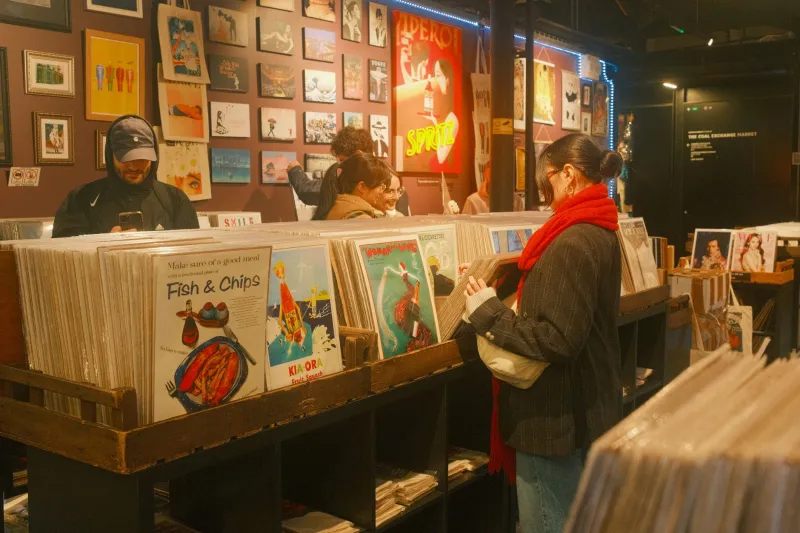
It is just past seven on a Thursday in a shop off Deptford High Street. The shutters are down, the card machine has been cashed up, and the owner has moved a stack of soul 45s off the counter to make room for a kettle. Nobody is here to buy anything. A woman in a raincoat is holding a copy of an old Bert Jansch LP like it’s a library book. A bloke near the door has brought a record in a plastic bag and is apologising in advance for the pressing. The first needle drops, the room goes quiet, and for the next forty minutes the shop is not a shop.
This is the after-hours listening session: part club, part living room, part low-stakes argument about whether the bass is too heavy. They are popping up in record shops from Leeds to Bristol, Glasgow to Norwich, usually on weeknights, usually free or cheap, usually announced by a handwritten sign and a story post rather than a ticketing platform. The format is almost aggressively simple. You bring a record. Someone plays it. Everyone listens. Then everyone talks over the last track and someone says the mix is muddy, and someone else says that’s the point.
The room is the rig
What makes these nights work is that they are not gigs with the furniture pushed back. There is no stage, no monitor wedge, no headline act selling merch from a folding table. The shop’s existing sound system does the heavy lifting — often a decent pair of floorstanders behind the counter, sometimes a secondhand Technics the owner has had since college. The acoustics are whatever the room gives you: plasterboard, vinyl racks, a coat rail that eats the top end. Nobody is trying to fix it with a line array.
The audience is the point. People sit on the floor, on mismatched chairs, on the step by the door. They shush each other during quiet passages and forget to during loud ones. They pass around a sleeve so everyone can read the credits. It is a surprisingly formal pleasure for a casual night out, and that formality is what makes it feel different from a pub quiz or a listening bar with a cocktail menu. The etiquette is unwritten but real: listen first, chat after, don’t be the person who talks through the first minute of side two.
A different sort of door money
The economics are almost embarrassingly small, which is part of the appeal. Many sessions are free. Some ask for a few quid on the door to cover heating and biscuits. A few run a raffle for a record the shop has doubles of. There is no brand sponsorship, no drinks tie-in, no content capture. The shop gets people through the door who might come back on a Saturday and buy something, but that is a happy side effect rather than the business plan.
That low-cost model changes the social contract. When a night is free and the room is small, people behave a bit better. They bring records they actually care about rather than records that make them look good. They listen to things they would not stream, because a stranger chose it and the room is committed to seeing it through. The stakes are low enough that a dud pressing or a dodgy mix is not a crisis — it is material for the chat afterwards.
The awkward bits nobody puts on the flyer
It would be dishonest to pretend these nights are frictionless. Public performance licensing is a live issue for any shop playing recorded music to an audience, and different places navigate it in different ways — some keep sessions private and invite-only, some rely on the fact that the audience is small and the event is informal, some have proper conversations with the relevant bodies. Neighbours are another consideration, especially in residential high streets where a bassline at 9pm travels further than you think. And there is always the risk that a listening session turns into a gig by accident, with someone plugging in a guitar and the whole thing losing its shape.
The best sessions seem to accept those constraints rather than pretend they don’t exist. They finish early. They keep the volume reasonable. They make it clear that the record is the event, not the person who brought it. That sounds precious until you sit through a night where it works — then it just feels like good manners.
What actually gets built
Ask anyone who runs one of these nights what they are for and you will get a version of the same answer: it is a way to make the shop useful after hours. Not a venue, not a club, not a content studio. A room with a record player and a door that opens.
What gets built is slower than a scene and more durable than a playlist. People learn each other’s names. Someone brings a record from a label nobody in the room has heard of, and three months later that label is playing a proper show in town. A teenager who only streams hears a full side of an album for the first time and realises that sequencing is a thing. A shop owner gets to talk about music with people who are not in a hurry. None of it shows up in a streaming report, and none of it needs to.
In a year when so much of music culture is optimised for the feed, the after-hours listening session is almost perverse in its refusal to be content. It is an event you have to be in the room for. The record ends, the lights go up, someone puts the chairs back, and the shop goes back to being a shop. But for a couple of hours it was something else: a local habit, built on trust, a decent turntable and the willingness to shut up and listen.