Between the Meal Deal and the Dry Cleaner: The High Street Is Curating Itself
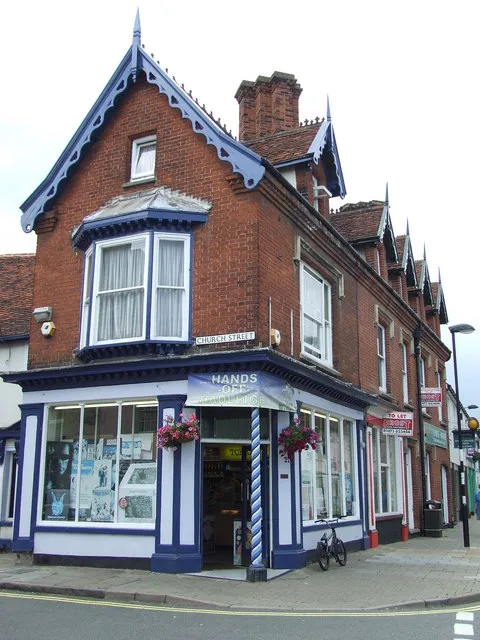
Photo: Keith Evans, CC BY-SA 2.0, via Wikimedia Commons
On a wet Tuesday in Leeds, a launderette window is doing more for contemporary art than plenty of private views. Behind the glass, between a poster for a missing cat and a laminated price list, someone has taped a grid of six small photographs. They are not labelled. There is no invigilation, no press release, no QR code. If you want to see them, you need to be waiting for a wash cycle or walking past on the way to the bus stop. The shopkeeper knows they are there. That is the entire curatorial framework.
This is not a new phenomenon, but in 2026 it feels less like a novelty and more like a coping mechanism. As high streets continue to reshuffle, artists are treating the shop window as a legitimate exhibition space. Not because they have given up on galleries, but because the shop window is where people actually are. The result is a loose, unannounced network of tiny shows that exist in the gaps between errands: a barber’s shelf in Cardiff, a takeaway counter in Glasgow, a corner shop’s magazine rack in Bristol. None of it waits for a white cube. Most of it waits for the kettle to boil.
The exhibition is a favour, not a fixture
The mechanics are almost insultingly simple. A strip of tape. A length of fishing line. A few blu-tack squares. Sometimes a shopkeeper will clear a shelf and say, go on then. Sometimes they will ask for nothing in return. Sometimes they will ask for a poster in the window, or a mention on a local Facebook group, or simply that the work does not scare the regulars.
In Cardiff, a barber has given over the narrow wall above his kettle to a rotating set of small prints. They sit between a mirror and a stack of dog-eared magazines. Customers look at them because there is nowhere else to look while they wait. In Glasgow, a takeaway has three tiny paintings screwed to the chipboard above the fryers. They are not protected by glass. They are protected by the fact that nobody touches them. In Bristol, a corner shop has turned a spare section of its magazine rack into a zine shelf. The owner does not call it a gallery. He calls it the shelf by the till.
This is not a movement with a manifesto. It is a series of arrangements. The artist gets a wall. The shopkeeper gets something to look at, something to talk about, and occasionally a new customer who came in specifically to see the thing taped to the fridge. No one is pretending it is the Tate. That is the point.
Vacancy is the backdrop, not the punchline
It would be easy to frame these shows as a response to empty shops. There are plenty of empty shops. The high street has been reshaped by rates, rents, online shopping and a decade of stop-start funding. But the accidental gallery is rarely filling a vacant unit. It is usually inside an occupied one. It is using the thin sliver of wall that already exists, the bit between the door and the window, the shelf that used to hold greetings cards.
That distinction matters. These shows are not a regeneration strategy. They are not a council pilot. They are not a landlord’s cultural placemaking exercise. They are a workaround. Artists are making work for the spaces that are already there, because the spaces that are purpose-built for art are either oversubscribed, underfunded or both. The high street is not the backdrop to the art. The high street is the venue, the distributor and, quite often, the critic.
In 2026, that feels practical rather than romantic. A shop window has opening hours. It has footfall. It has a built-in audience of people who did not wake up planning to look at art. That is not a compromise. That is distribution.
The shopkeeper as curator, editor and occasional bouncer
The most underrated figure in this scene is the shopkeeper. They are not a curator in the white-cube sense. They are an editor, a landlord of the wall and, occasionally, a bouncer. They decide what goes up. They decide what comes down. They decide whether the nude drawing is appropriate next to the school run, whether the political slogan will cause aggro with the regulars, whether the framed photograph is too heavy for the shelf above the till.
That is not a failure of artistic freedom. It is a negotiation. Artists who work in these spaces learn quickly that permission is not a contract. There is no insurance, no invigilation, no climate control. The work has to be robust, small, affordable and capable of surviving a bit of grease and sunlight. It also has to survive the shopkeeper’s auntie saying she does not get it.
Some artists will find that frustrating. Others will find it freeing. The white cube asks you to make work for a room that has been designed to remove distraction. The shop window asks you to make work for a room that is all distraction. That is a different brief. It is also a useful one.
The audience is a queue, not a private view
What these spaces reveal most clearly is how narrow the gallery audience can be. The people who see a show in a launderette are not necessarily people who go to galleries. They are people who need clean socks. They are people who pop in for a pint of milk and leave having looked at a photograph of a bus shelter for thirty seconds. That is not a lesser encounter. It is a different one.
There is no threshold anxiety. No reception desk. No sense that you need to know how to behave. The work is seen in peripheral vision, between the meal deal and the dry cleaner. A child asks what it is. A customer recognises the street in the picture. Someone takes a photo and sends it to a friend. The show happens in the middle of ordinary life, which is where most people actually are.
That is the quiet argument these accidental galleries make. Art does not always need a dedicated room. Sometimes it needs a window, a bit of tape and a shopkeeper who is willing to see what happens.
The limits of tape and good manners
None of this is a substitute for funded spaces. Tape fails. Sun fades. Grease gets everywhere. Nobody is paying the artist a fee, and nobody is paying the shopkeeper for their time. The model runs on goodwill, which is a finite resource. It should not be romanticised into a policy. A high street full of tiny exhibitions is not the same as a high street with affordable studios, secure venues and proper cultural funding.
But it is still worth noticing. The accidental gallery is not waiting for a strategy. It is not waiting for a regeneration board. It is not waiting for a white cube to become available. It is happening now, in the gaps, with permission and a strip of tape. That is the sort of live culture that does not announce itself. You just have to walk past at the right time, or need your washing done.