The Library With a Mitre Saw: Inside the UK’s Borrowed Equipment Revolution
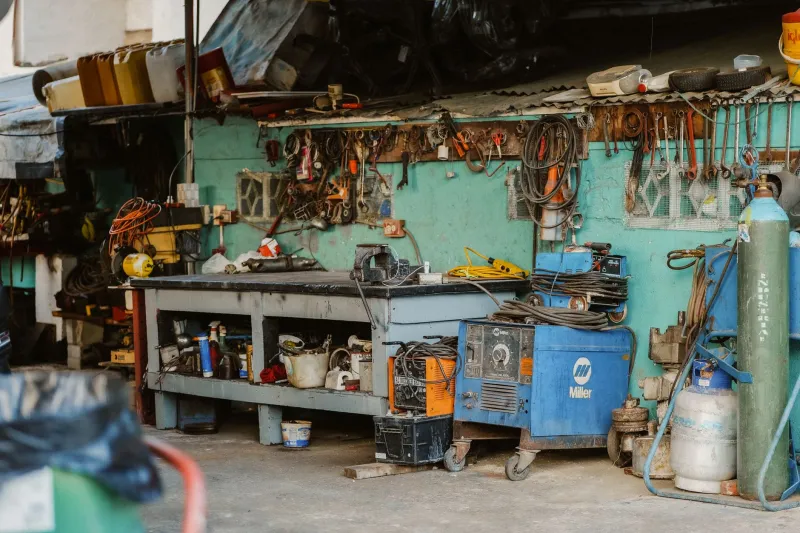
On a damp Saturday morning in a railway arch somewhere in the North of England, a volunteer is checking a bass amp back into stock. Beside it sits a lighting kit in a scuffed flight case, a sewing machine with a handwritten repair tag, and a mitre saw that has already seen more weekend projects than most garages. This is not a hire shop. It is a library — and it is part of a small but growing UK network of volunteer-run equipment libraries lending the tools that creative work actually requires.
The pitch is simple. Pay a modest membership, book what you need, collect it, use it, bring it back. In practice, it is a quiet challenge to ownership culture. For a musician who cannot justify £400 on an amp for a handful of gigs, a film-maker who needs a lighting kit for a two-day shoot, or a maker who wants to try a mitre saw before committing to one, the library offers a third way between buying and going without.
A different kind of membership
The model varies from place to place. Some libraries are run by volunteers from community workshops, others are attached to makerspaces, music hubs or local charities. Membership might be £10 a year, pay-what-you-can, or free for local residents. Borrowing periods are usually short — a few days to a week — and deposits are common for higher-value items. Inductions matter. You do not simply take a synth home; you learn how to use it, how to pack it down, and who to call if something goes wrong.
That induction culture is part of the point. Libraries are not just distributing gear; they are teaching confidence. A young producer who has never touched a hardware synth can book one for a weekend and learn its limits without a sales assistant hovering. A film-maker can test a lighting setup before hiring a crew. A furniture maker can borrow a tool for a single job and return it instead of filling a shed with equipment they use twice a year.
The stock is often donated or loaned by people who have upgraded, downsized or simply stopped using something. Studios pass on old monitors. Musicians donate pedals and cables. Makers bring in tools from garages. Volunteers repair what they can, label what they cannot, and retire the rest. The result is a collection that is eclectic by design — a bit like the local scene it serves.
From garage to grid
The impact is easiest to see at the small scale. A band can borrow a PA for a benefit gig. A zine publisher can reserve a sewing machine for binding. A community film project can get a lighting kit without blowing its entire budget on hire. These are not glamorous wins, but they are the kind of practical support that keeps independent creative work moving.
There is a social dimension, too. Libraries create a reason for people to meet. You return a saw and end up talking to someone about a shelf they are building. You collect an amp and bump into a drummer who needs one for a rehearsal. In cities where studio space is expensive and rehearsal rooms are disappearing, an equipment library can function as a low-key social hub — less formal than a networking event, more useful than a group chat.
The cost-of-living squeeze gives this a sharper edge. When rent, bills and transport are all rising, the idea of buying specialist equipment for a one-off project feels less like an investment and more like a risk. Borrowing lowers the barrier to entry. It also lowers the barrier to experimentation. You can try a new instrument, a new workflow or a new material without committing to a purchase that might sit unused.
The economics of sharing
None of this is free to run. Storage is expensive. Insurance is fiddly. Repairs take time. Volunteers burn out. High-value items need security and tracking. There is a real tension between keeping membership low and keeping the lights on. Many libraries rely on a mix of grants, donations, community shares and local authority support — funding streams that are themselves under pressure.
Then there is the question of liability. What happens if a borrowed saw breaks, or a synth comes back with a dead key? Clear terms, deposits and inductions help, but they do not solve everything. Libraries have to balance trust with risk. Too much bureaucracy and people stop borrowing. Too little and the stock disappears.
The most interesting projects treat these challenges as part of the mission rather than a distraction from it. Repair workshops teach people how to fix what they borrow. Volunteer rotas build skills. Partnerships with local venues and studios share space and knowledge. The library becomes a small infrastructure for creative practice — not a charity shop for tools, but a shared resource with a clear purpose.
Why it matters now
The UK has spent years talking about access to the arts. Less time has been spent on access to the equipment that makes art possible. Tool libraries do not solve the housing crisis or replace proper funding for artists. They do something narrower and more practical: they put a mitre saw, a bass amp or a lighting kit within reach of someone who could not otherwise afford one.
That matters because creative confidence is often built through trying things. A borrowed synth can lead to a first track. A borrowed camera can lead to a first short film. A borrowed tool can lead to a first repair, a first commission, a first workshop. Ownership is not the only route into making. Sometimes a library card is enough.