Sown, Not Sourced: The Artists Letting the Seasons Set Their Palette
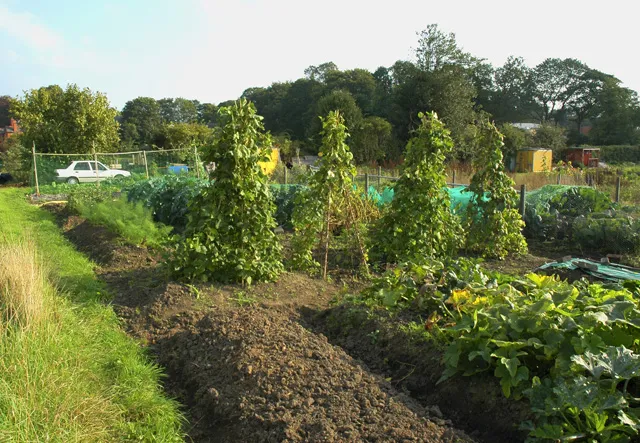
Photo: Gwilym James, CC BY-SA 2.0, via Wikimedia Commons
There is a particular smell to an allotment studio in late autumn: wet soil, rotting leaves, and the sharp, earthy tang of a dye pot left to cool under a tarpaulin. On a damp Saturday in Manchester, an artist is not refreshing a supplier’s website or waiting for a courier. They are checking a bed of madder root, poking at a water butt set aside for retting flax, and trying to work out whether the willow coppice has had enough of a haircut before winter.
For a growing number of UK makers, the allotment is no longer just a nice idea for weekends. It is part of the production line. In 2026, with material costs still making small studios wince and online suppliers offering the same tidy range of colours and fibres, some artists are choosing a different kind of supply chain: one that starts with seed packets, council leases and a willingness to wait.
The plot as a production line
The romantic version of this story writes itself: artist grows plant, artist makes beautiful thing, everyone goes home smelling of lavender. The reality is more like project management with slugs. Beds are planned like a materials budget. A patch of flax is not just a crop; it is a future length of cloth, a retting experiment and a question about whether the studio has anywhere to dry it. A row of weld is a yellow dye bath waiting to happen, if the weather cooperates and the pigeons do not get there first.
In Manchester, makers involved in this loose scene tend to work small. A few beds of flax might yield enough fibre for a handful of textile pieces rather than a full collection. The process is hand-heavy: pulling, retting, breaking, scutching, hackling. It is not efficient in any conventional sense. But it gives the work a texture that is hard to fake, and it forces decisions to happen earlier. You cannot leave a colour choice until the week before an exhibition if the colour is still in the ground.
Bristol’s version has a stronger dye-garden flavour. Madder, weld, woad and other pigment plants turn up in plots that look half-herbarium, half-lab. The results are unpredictable by design. Soil, rainfall and harvest timing all leave a mark. A dye bath made from homegrown plants is not a Pantone reference; it is a record of a particular season. For artists tired of materials that arrive looking exactly the same every time, that is the point.
Glasgow brings a different set of compromises. The growing season is shorter and the weather is less forgiving, so the emphasis tends to fall on hardy crops, shared polytunnels and willow that can cope with a soggy site. Willow is useful that way: coppiced regularly, it can feed sculpture, basket-making and structural work without demanding a heated studio. It also looks good in February, which is more than most materials can manage.
Waiting is the medium
The biggest shift is not botanical. It is temporal. Most creative practice in 2026 is built around speed: same-day delivery, instant references, a feed that refreshes before you have finished looking at it. An allotment studio runs on a different clock. You plant in spring for an autumn harvest, or in autumn for a crop that will not be ready until next summer. You learn to think in rotations. You learn that a failed crop is not a moral failure; it is just a bad year.
That has an effect on the work itself. Artists who grow their own materials tend to plan further ahead, sometimes 18 months or more. They make smaller editions. They accept variation. A textile piece might carry the faint irregularity of a hand-processed fibre; a sculpture might show the bends and knots of a particular willow rod. None of this fits neatly into a culture that wants a new drop every week, but it does fit the independent scene’s long-running interest in work that feels made rather than manufactured.
Land, leases and the paperwork
The less romantic obstacle is access. Allotment waiting lists in many UK cities are long, and not every site is set up for the messy business of making. Rules vary on sheds, polytunnels, water butts and what counts as cultivation. Some artists share plots. Others work through community gardens, city farms or temporary leases on land waiting for development. The result is a patchwork of arrangements, held together by goodwill and the kind of informal networks that keep a lot of UK creative practice alive.
There is a tension worth naming. Artists moving onto allotments can bring energy and new attention, but they can also bump up against older plot-holders who are there to grow dinner, not dye plants. The successful projects tend to be the ones that do not act like they have discovered the countryside. They share tools, swap labour and accept that the site has its own culture. An allotment is not a blank studio with a fence around it.
The limits of the idyll
It would be easy to over-romanticise this. Growing materials is hard work, and not all of it is photogenic. There are crop failures, backache, vandalism, and the small indignity of discovering that something has eaten the thing you were counting on. Most artists doing this are not trying to be fully self-sufficient. They still buy thread, tools, medium and the occasional emergency order. The point is not purity. It is a partial shift: a way of making the studio less abstract, more local and more accountable to the place it sits in.
That partial shift is what makes it interesting. In 2026, the UK’s independent creative scenes are full of people trying to build smaller, stranger and more sustainable ways of working. The allotment studio is one of the scruffier examples. It does not offer a neat solution to material costs or land access. It does offer a different starting point: a palette that begins in soil rather than a browser tab, and a schedule set by the seasons rather than the feed.
On the plot, winter is not a dead period. It is when the planning happens, when the willow is cut, when the dye pots are cleaned and the seed catalogues come out. The work is already underway. It just will not be ready to post about until next year.