The Room Is the Instrument: Inside the UK’s Borrowed-Space Recording Boom
There is a certain sound you only get in a stairwell at 7am. Not the polished bloom of a plate reverb, not the fake cathedral of a plugin preset — something tighter and stranger. Footsteps. A door somewhere above. The low hum of a building waking up. In 2026, a growing number of UK musicians are chasing exactly that sound, and they are finding it in places that were never designed for music.
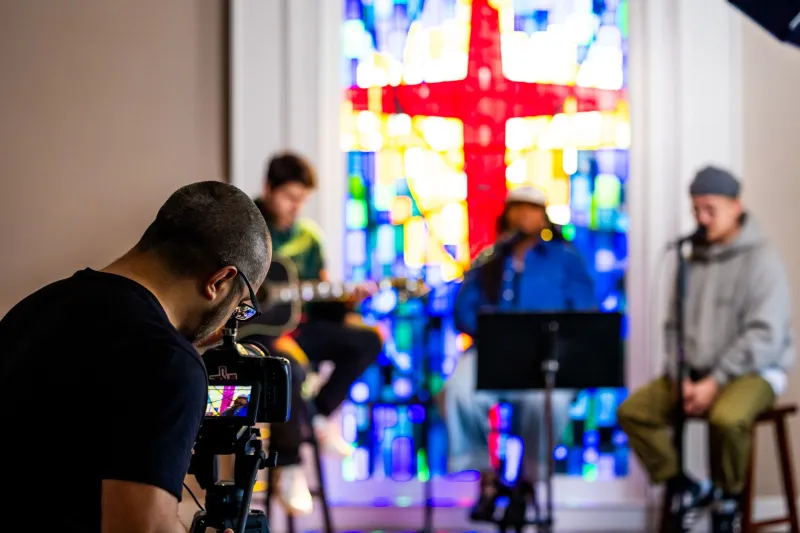
Church naves, council-run corridors, multi-storey car parks, lift lobbies, even public toilet blocks: these are the accidental studios of the independent scene right now. The appeal is not just cost, although cost is real. It is that a room with a history refuses to behave like a blank canvas. It pushes back. And that push is ending up on record.
The Scout’s Ear
Sound engineers have always known that a room is part of the instrument. What is changing is how deliberately people are hunting for the right room. Call it space scouting: a loose practice of walking into civic buildings, clapping once, listening to what comes back, and deciding whether the geometry is worth a favour, a hire fee or a carefully worded email.
The best scouts are not looking for perfection. They are listening for character. A stairwell with hard walls and a long vertical run can give a vocal an unearned sense of drama. A church hall with a low ceiling and soft furnishings can dry out a drum kit in a way that feels intimate rather than dead. A multi-storey car park — all concrete, ramps and open sides — has a slapback that no studio designer would ever specify, which is precisely why it works.
Engineers describe the process as a mix of acoustics and diplomacy. You need to know when the space is empty, who holds the keys, and whether the cleaner will mind a bass amp blocking the corridor. The sessions that succeed are rarely the ones with the most gear. They are the ones where someone has done the boring work of asking properly.
One Take, No Safety Net
The performances recorded in these spaces tend to share a philosophy: fewer takes, more commitment. When you are borrowing a room for two hours, you cannot spend forty minutes getting the snare right. You set up, you listen, you play. The bleed of a nearby road or the rattle of a fire door becomes part of the take, not a reason to stop.
That constraint is producing a different kind of record. Not lo-fi for the sake of it — plenty of these sessions are captured with good microphones and careful ears — but site-specific. You can hear the place. A vocal recorded in a chapel has a tail that feels borrowed from the building. A guitar tracked in a car park has a coldness that suits certain songs better than any warm preamp.
For artists who have spent years making music that sounds like everywhere and nowhere, that specificity is liberating. The room becomes a collaborator with opinions. It refuses to be neutral. And in a streaming landscape still obsessed with loudness and clean edges, a recording that sounds unmistakably like a place can feel like a small act of resistance.
The Permission Slip
None of this is as simple as turning up with a recorder. Civic spaces come with civic rules. Churches have congregations, car parks have security, corridors have fire regulations. The engineers doing this well are careful about access, timing and leaving no trace. They ask. They explain. They do not treat a public building as a free resource with no consequences.
There is a quiet ethics to the scene. Good practice means crediting the space, respecting the people who keep it running, and not turning a Sunday service or a school pickup into a recording session. Some councils and arts officers have started to see the value, helping match musicians with underused rooms. Others remain understandably cautious. The tension is real: borrowed space is cheap, but it is not neutral, and the best work happens when musicians remember that.
Why It Sounds Like Now
Part of this is economics. Studio time is a luxury, and independent musicians have always been resourceful. But the borrowed-space boom is also an aesthetic choice. Plugins can imitate the acoustics of a famous room, but they cannot imitate the social texture of a place — the echo of a closed-down high street, the cold air of a car park, the hush of a church that has heard a hundred different kinds of gathering.
In 2026, that texture is becoming a signature of the UK’s independent sound: raw, one-take, and unmistakably local. It is not a rejection of craft. It is craft applied to constraints. The room is the instrument, and the instrument is borrowed. If the best records of the year smell faintly of Dettol and stairwell dust, that will not be an accident. It will be the sound of musicians making peace with the spaces they actually have — and finding something worth keeping in the reverb.