The Town Is the Sample: Making Art From a Postcode
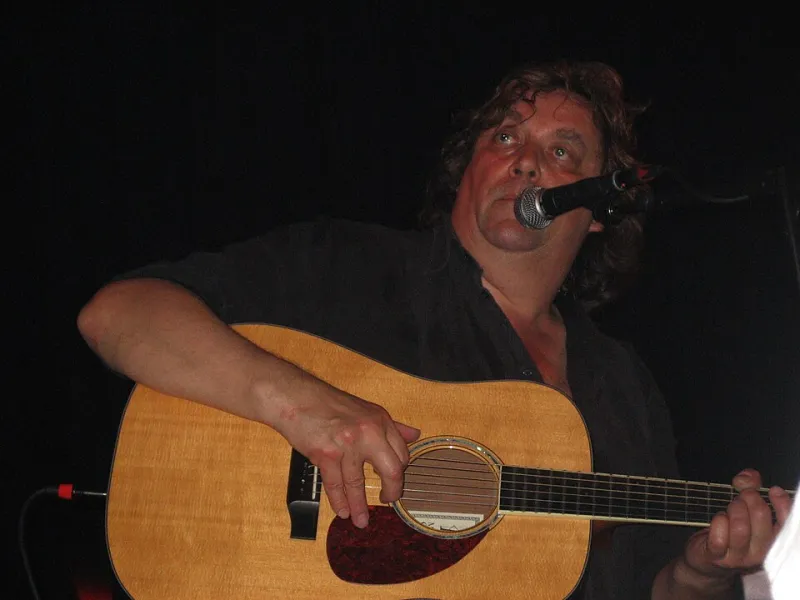
Photo: Erik Joling, CC BY-SA 3.0, via Wikimedia Commons
Every town has a sound. Not the tourist-board version, the one with the nice bridge and the farmers' market. The actual one. The rattle of shutters coming down on a high street at 6pm. The specific way a bus driver says 'town centre'. The rehearsal room above a chip shop that smells of old carpet and ambition.
A growing number of independent musicians and visual artists are building their work around that sound. Not as a backdrop, but as the material. Local dialect, field recordings, venue lore, the names of streets that mean nothing to anyone outside a ten-mile radius. The result is work that could not come from anywhere else.
The question is whether that is a limitation or an advantage. In a culture industry obsessed with scale, the answer is not obvious.
A genre with a postcode
In Fleetwood, a rapper called Marla Dean records over beats built from the sound of the sea wall and a sample of her grandad's fishing boat radio. The lyrics are thick with local references. A specific pub. A specific estate. A specific bus route. None of it is explained.
In Ebbw Vale, a duo called Rook and Reedy make sparse, haunted folk songs built around recordings of the valleys and the old steelworks. In Kirkby, a producer who goes by 317 makes grime instrumentals that use the sound of the 317 bus and the echo of a shopping centre at closing time. In Worksop, a visual artist has spent two years photographing the same roundabout in every kind of weather, and the resulting book is one of the most quietly affecting things I have seen this year.
These are not isolated cases. They are part of a shift. For years, the advice to young artists was to sand down the edges. Lose the accent. Make it universal. The internet made that easier and also made it pointless. If everyone can sound like everyone, sounding like somewhere becomes a strategy.
Field notes, not moodboards
The best of this work is not nostalgic. That is the trap. A local reference can be a shortcut to authenticity, a lazy way of signalling that you are real. But the artists doing it well are not making postcards. They are making field notes.
Marla Dean's tracks are not love letters to Fleetwood. They are arguments with it. The sea wall sample is not there to make you feel something about the seaside. It is there because it is the sound of the place she is trying to get out of and the place she keeps coming back to. That tension is the work.
The same goes for the visual artists. A photograph of a roundabout in Worksop is not interesting because it is a roundabout. It is interesting because the photographer has stood there long enough to see something. Specificity is not the same as sentimentality. It is a discipline.
The algorithm can't pronounce it
There is a practical argument for going local, too. The algorithmic feed rewards sameness. It is very good at finding more of what you already like. It is less good at finding something that requires context. A song with a thick accent and a reference to a specific estate does not travel well on a global playlist. But it travels very well in the town it comes from, and in the towns that recognise themselves in it.
That is a different kind of scale. Not viral, but deep. A hundred people who really get it can be worth more than a million who scroll past. For artists without major-label budgets, that is not a consolation prize. It is a business model.
It is also a way of building an audience that stays. A hyper-local artist can play the same town four times a year and still sell out. They can make work with the local venue, the local record shop, the local community group. They can be a scene rather than a content stream.
The risk of the local trap
None of this is a guarantee. Hyper-local specificity can become a gimmick. It can turn into a competition to see who is the most authentically rooted. It can exclude people who moved to a town last year, or people who do not have the right accent, or people who love a place but do not want to write about it in dialect.
There is also a risk of parochialism. A scene that only talks to itself can get small. The artists who last are the ones who use the local as a way in, not a way out. They take the specific and make it resonant. You do not need to know the bus route to feel the frustration in the song. You just need to have waited for a bus.
Small places, long tails
The national culture press has a habit of discovering a town when it has a moment, then moving on. The artists who are building their work around a postcode are not waiting for that. They are making their own infrastructure: small labels, nights in back rooms, zines, films, records that are sold at the gig and nowhere else.
That is not a rejection of the wider world. It is a different route through it. The local is not the opposite of ambitious. It is a way of being ambitious without pretending to be from somewhere else.
So is hyper-local specificity a more sustainable strategy than chasing algorithmic universality? Probably, for some artists. It is cheaper, it is more distinctive and it builds a real audience rather than a passive one. But it is not a formula. It is a decision about what kind of work you want to make, and who you want to make it for.
Every town has a sound. The artists worth watching are the ones who listen closely enough to hear it, and brave enough to put it in the mix.