Charcoal, Cash and a Chalkboard: Britain’s Roving Life-Drawing Nights Are Just Fine Without Your App
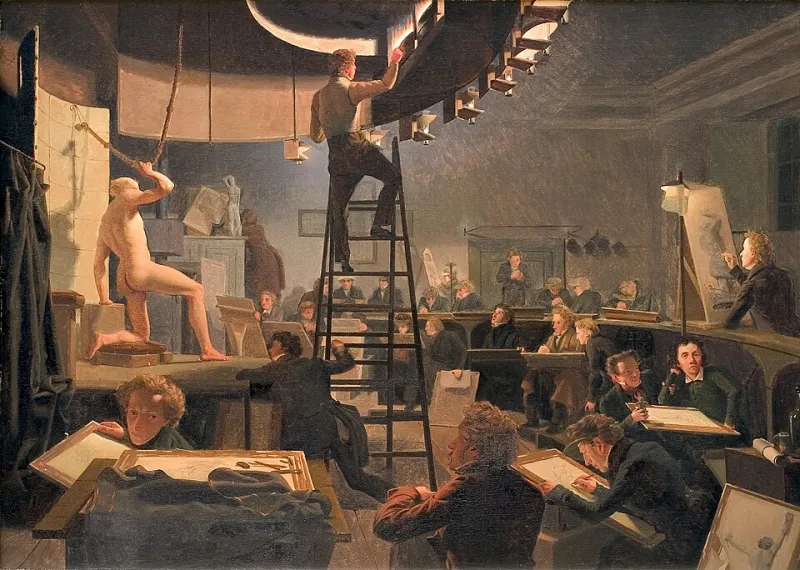
Photo: Wilhelm Bendz, Public domain, via Wikimedia Commons
On a Tuesday in Leeds, the back room of a pub smells of beer and fixative. A chalkboard leans against the wall: Life drawing, 7pm, £7, cash only. No need to book. A cash box sits on a stool. A model waits behind a curtain. The room fills with people who have come straight from work, carrying sketchbooks held together with elastic bands.
This is the chalkboard economy in action — not a tech platform, not a membership scheme, just a rotating cast of organisers, venues and models keeping the cost of looking closely at a human body as low as possible. Across Bristol, Sheffield, Glasgow and London, these nights are quietly becoming one of the UK’s most social art forms. They are not trying to disrupt anything. They are trying to keep the door open.
The Anti-App Art Class
The format is almost aggressively simple. An organiser books a room — a pub back room, a disused garage, a community hall with bad lighting — and pays a model. They put out a chalkboard. They bring a cash box. They charge enough to cover the model, the room and maybe a coffee for themselves. Then everyone draws.
There is no app to download. No membership card. No waiting list. You turn up, you pay, you draw. If you cannot pay, you talk to the organiser. Most nights have a quiet arrangement for that, kept off the chalkboard.
Nadia, who runs a night called Soft Pencil in Bristol, started it after moving from a city where life drawing felt gated. She had a day job in logistics and a folder of contacts from an art foundation course she never finished. She found a pub with a function room that was empty on Mondays. She bought a chalkboard from a hardware shop. The first night, six people came. Now it is closer to forty, and she has a rota of three models.
‘The whole point is that you don’t have to be good,’ she says. ‘You just have to be there. The chalkboard does the admin. The cash box does the trust.’
The Model Is Paid First
Ask any organiser what the money is for and they will tell you the same thing: the model. In a good week, the model gets paid before the room hire. In a bad week, the organiser covers the shortfall. The cash box is not a business model; it is a small act of mutual aid.
At a night in Sheffield called Garage Draw, the organiser Tom has a laminated sheet taped inside the cash box lid: model fee, room fee, any leftover goes to the next session. There is no card reader. There is no online ticketing. There is a WhatsApp group for regulars, but it is optional. The chalkboard is the official announcement.
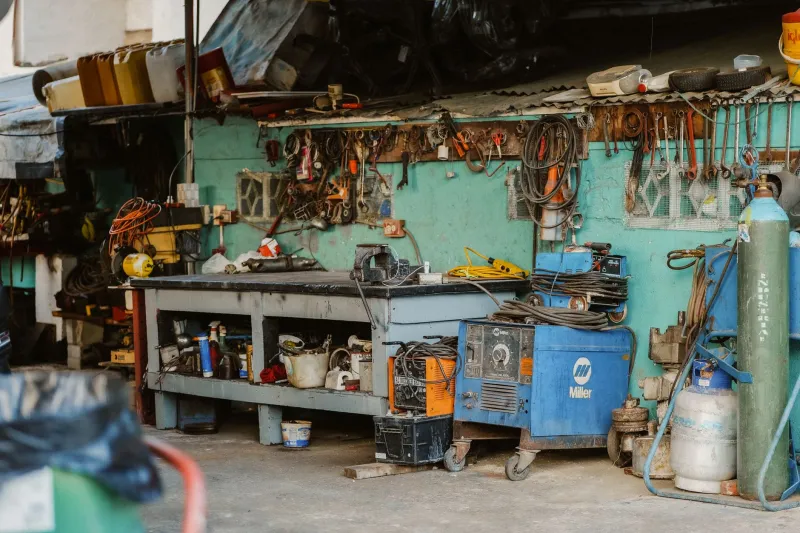
Tom started the night in a disused garage behind a row of terraces. The garage belongs to a friend of a friend. There is a space heater, a rug, and a portable speaker playing low-volume jazz. The model stands under a work lamp. The drawings are often terrible. Nobody minds.
‘We are not trying to build a brand,’ Tom says. ‘We are trying to build a Tuesday.’
A Mixed Room, by Design
The most striking thing about these nights is who turns up. There are art students, yes, but also nurses, tattoo artists, retired teachers, delivery drivers and at least one person who has not drawn since GCSE. The chalkboard usually includes a few prompts: five-minute poses, a long pose, a hand study. There is no critique. There is no sharing circle. There is no Instagram wall.
In Glasgow, a collective called Rough Paper rotates between a pub basement, a bike workshop and a church hall. They keep the fee at £6 and offer free paper and charcoal at the door. The organisers say the mixed room is the point. If it becomes too much of an art-school reunion, they change the venue or the time.
‘You get a different conversation when there is no wine list,’ one organiser says. ‘People talk about line and weight, but they also talk about their bus route.’
Why It Sticks
The chalkboard economy is not a reaction against the internet. Most organisers use social media to post a photo of the chalkboard and nothing else. The point is not to be offline. The point is to keep the threshold low. A cash box is faster than a ticketing platform. A chalkboard is more welcoming than a booking form. A rotating venue means the night can survive a rent rise.
These nights are also doing something quieter: they are rebuilding local creative communities without polished studio spaces. They are making the pub back room a studio. They are making the disused garage a gallery of unfinished work. They are making a Tuesday night feel like it belongs to the people in the room.
In a year when the cost of everything creative keeps climbing, the chalkboard economy offers a different maths. Seven pounds. A piece of charcoal. A model. A room. A door that stays open.
That is not a trend. It is a habit. And it is spreading.