The Function Room Is the Venue: Britain’s Accidental Rehearsal Infrastructure
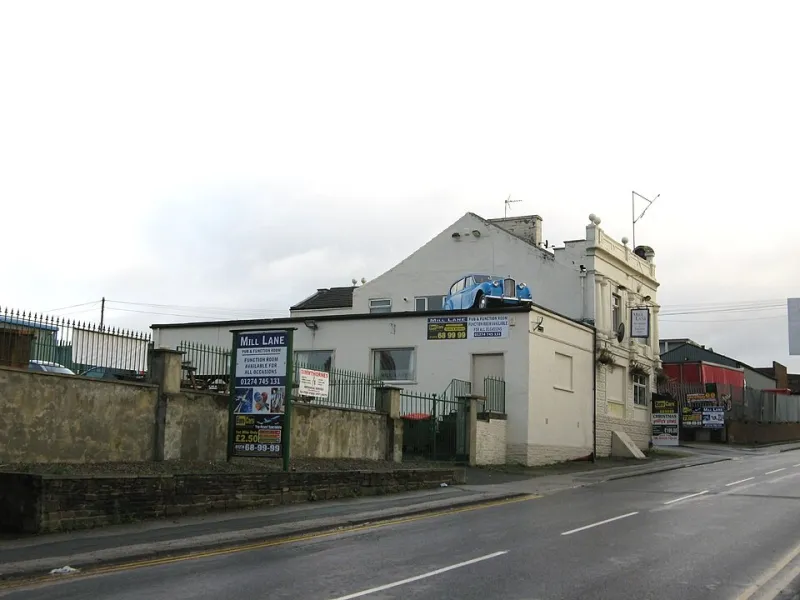
Photo: Stephen Armstrong , CC BY-SA 2.0, via Wikimedia Commons
There is a particular smell to a pub function room that has become a rehearsal space: stale lager, hot dust, the ghost of a Sunday carvery, and something electrical. The carpet is the colour of a bad bruise. The ceiling is low enough to make a drummer think about posture. And on a Tuesday night in 2026, it is probably the only place in town where four people can plug in, turn up and argue about a bridge for three hours without being asked to leave.
The rooms are not glamorous. They are not designed for music. They are, in most cases, designed for weddings, wake receptions, darts finals and the kind of birthday party where someone brings a speaker and a playlist. But across the UK, these back rooms, community halls and rear-of-shop spaces have become something close to infrastructure: the first rung on a ladder that otherwise starts at thin air.
The economics of a room nobody else wants
A pub landlord and a band are, on paper, an odd couple. One is running a business with tight margins and a licence to protect. The other is a group of people with a shared van, a practise amp and a group chat full of unresolved opinions. Yet the arrangement works because both sides need something the other has.
For the pub, daytime and early-evening trade is the hard part. A function room that sits empty from Monday to Thursday is a cost: heating, lighting, business rates, the feeling that half the building is asleep. Hire it out at a modest hourly rate and it starts to pay for itself. It also brings people through the door who might buy a drink, a bag of crisps or a coffee, and who might later bring their friends to a gig. For the band, the appeal is simpler: it is cheaper than a dedicated studio, it is usually local, and it does not require a deposit the size of a small holiday.
The result is a quiet, unregulated market in rooms that were never purpose-built. Some are run by the landlord directly. Some are handed to a volunteer who keeps a paper diary and a key on a length of blue string. Some are attached to community centres, social clubs, church halls or the back of a shop that sells musical instruments and needs the footfall. None of it appears in the glossy version of the music industry. All of it is where the next local band is currently learning how to be a band.
Noise, planning and the awkward question of permission
The romantic version of this story stops at the image of a landlord who loves music and a room full of amps. The practical version involves planning departments, licensing committees, environmental health officers and the small matter of whether the building is allowed to be used that way at all.
Many of these spaces operate under the radar of formal planning permission. A room that hosts the occasional party is not necessarily consented for regular amplified music, and a change of use can be a bureaucratic labyrinth for a landlord who is, realistically, trying to keep a pub open. The Agent of Change principle — written into national planning policy in England in 2018 and reflected in policy elsewhere in the UK — was meant to protect existing music venues from the complaints of new residential neighbours. It helps, but it does not magically solve a function room with single-glazed windows and a shared wall with a terraced house.
So the workarounds multiply. Bands play earlier. Drummers use electronic kits or brushes. Someone builds a timber frame inside the room and fills it with insulation. Someone else buys a decibel meter and discovers that a full drum kit at a comfortable volume is louder than anyone expected. Volunteers learn the difference between a noise complaint and a noise abatement notice. Landlords learn that a licensing condition can be a friend as well as a threat, because a written, reasonable plan is easier to defend than a shrug.
This is the unglamorous bureaucracy of local music. It is also the reason the rooms survive. The ones that last tend to have a landlord who answers the phone, a volunteer who keeps records, and a relationship with the neighbours that is at least civil. It is not a policy framework. It is a set of habits.
The volunteers holding the diary
Behind most of these rooms is someone who is not paid enough, or at all. They run the booking system, which is often a spreadsheet and a WhatsApp group. They hold the keys, chase the unpaid hire fees, replace the broken mic stand, and explain — again — that the room is not available on the first Thursday because the darts team has it.
They are also the ones who deal with the awkward bits: the band that leaves the room in a state, the teenager who needs a parent’s permission, the amplifier that trips the fuse, the neighbour who complains about the van blocking the alley. In community centres, they are often the same people who run the lunch club and the toddlers’ group, which means they are practised in the art of the gentle but firm rota.
This labour is invisible in the way that all volunteer infrastructure is invisible, until it stops. When a keyholder retires or a landlord sells up, the room can vanish in a fortnight. The bands do not necessarily disappear, but they scatter: to a pricier studio, to a mate’s garage, to the limbo of not practising at all. The loss is not dramatic enough to make the local news. It is just a gap in the weekly rhythm.
Why a scruffy room is a cultural asset
The case for these spaces is not nostalgia. It is pipeline. A band that cannot afford to rehearse does not become a band that plays the 200-capacity venue in town. It becomes a band that breaks up, or a group of friends who never quite get past the first three songs. The function room is where songs are tested, where a setlist is trimmed, where a singer learns that the chorus does not work at volume. It is where the local scene actually happens, long before anyone books a support slot.
It is also where the audience is made. All-ages shows in community halls, matinee gigs in pub back rooms, the strange and lovely atmosphere of a Sunday afternoon rehearsal that turns into a tiny performance for whoever is in the bar — these are the formats that keep music local and accessible. They do not require a ticketing platform or a marketing budget. They require a room, a plug and a person who will unlock the door.
As of 2026, the conversation about grassroots music often focuses on venues: the ones closing, the ones being bought by trusts, the ones fighting redevelopment. All of that matters. But the room above the pub is upstream of the venue. It is the place where the band is formed, not the place where it is seen. If the UK wants a music scene that is not just a handful of cities and a few lucky graduates, it needs to treat these rooms as part of the map, not as a charming accident.
The fragile bit
The awkward truth is that this infrastructure is held together by goodwill, cheap rent and the tolerance of neighbours. A change in a landlord’s circumstances can end it. A single noise complaint can curtail it. A rise in insurance or energy costs can make the hire fee unviable. And the volunteers who keep it going are not infinitely replaceable.
The solutions are not glamorous either. Councils can map the rooms and make the planning route clearer. Landlords can be encouraged to see music as part of a mixed-use high street rather than a problem to be managed. Bands can be better neighbours. Volunteers can be paid, or at least supported. None of this is a silver bullet. All of it is more useful than another panel discussion about the importance of culture.
So next time you are in a pub and you hear a muffled bassline coming through the ceiling, do not assume it is a private party. It might be the most important room in town. It is not a venue, not really. It is the place before the venue — and it is keeping the whole thing alive.